
Neuro-Linguistic Programming:
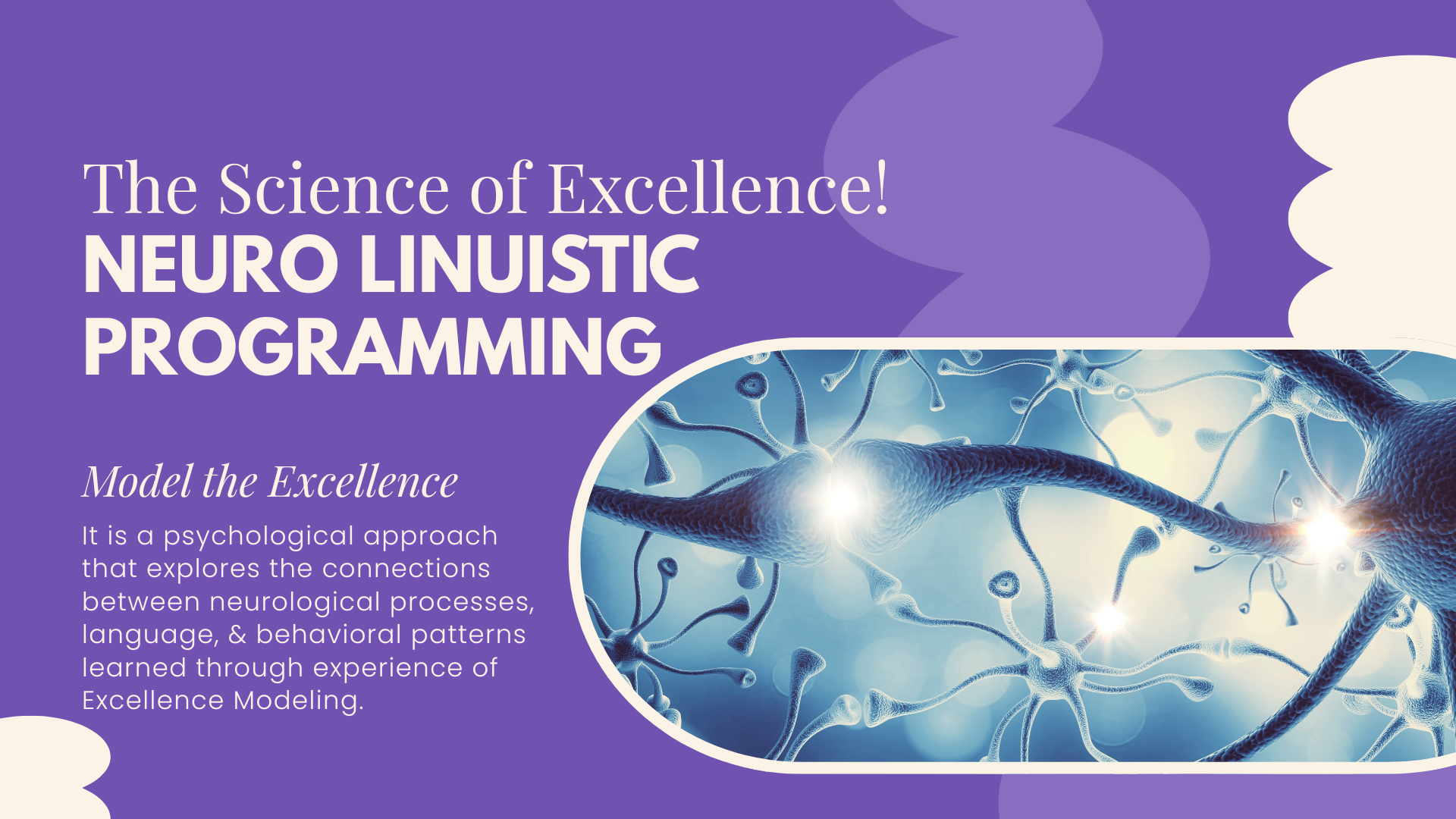
“The Science of Excellence”
Neuro-Linguistic Programming (NLP) is referred to as “The Science of Excellence,” an approach that focuses on understanding and replicating exceptional performance and communication. Rooted in the study of how language and behavior (both internal and external) influence the human brain, NLP provides tools and techniques for personal development, effective communication, and achieving success in different areas of life.
What is Neuro-Linguistic Programming?
Neuro-Linguistic Programming is a psychological approach that explores the connections between neurological processes, language, and behavioral patterns learned through experience. It was developed in the 1970s by Richard Bandler and John Grinder, who aimed to model the skills of successful individuals and uncover the strategies that led to their accomplishments.
Key Components of NLP
- Neuro: This aspect refers to the brain and the nervous system. NLP examines how sensory experiences—visual, auditory, and kinesthetic—affect our thoughts and behaviors.
- Linguistic: Language plays a crucial role in NLP. It investigates how words and phrases we use shape our perceptions and interactions with the world.
- Programming: This involves identifying and altering patterns of thoughts and behaviors to achieve specific goals. By reprogramming these patterns, individuals can enhance their performance and well-being.
Principles of Excellence in NLP
NLP is built on several core principles that define the pursuit of excellence:
- Modeling Success: One of the fundamental ideas in NLP is that by studying and emulating the behaviors of successful people, others can achieve similar results. This involves identifying the beliefs, mental strategies, and communication styles of high achievers.
- Outcome Orientation: Setting clear, well-defined goals is essential in NLP. Practitioners are encouraged to focus on desired outcomes and develop action plans to achieve them.
- Sensory Acuity: Heightened awareness of sensory information is crucial for understanding both oneself and others. This involves being attentive to non-verbal cues, such as body language and tone of voice, to enhance communication and rapport.
- Flexibility: Adaptability in behavior and thinking is vital for overcoming challenges and achieving objectives. NLP promotes the idea that if one approach isn’t working, it’s important to try different strategies until success is achieved.
Applications of NLP
NLP’s versatile techniques have been applied across various fields, including:
- Personal Development: Individuals use NLP to overcome limiting beliefs, manage emotions, and boost self-confidence.
- Business and Leadership: In the corporate world, NLP strategies enhance leadership skills, improve team dynamics, and foster effective negotiation.
- Therapy and Counseling: Therapists and counselors employ NLP to help clients resolve phobias, traumas, and negative habits.
- Education: Educators use NLP to develop teaching methods that cater to different learning styles, enhancing student engagement and comprehension.
Conclusion
Neuro-Linguistic Programming, as “The Science of Excellence,” provides a framework for understanding and enhancing human potential. By focusing on the intricate relationship between mind, language, and behavior, NLP empowers individuals to break through barriers and achieve greatness in their personal and professional lives. Whether you’re aiming to improve communication, leadership, or self-mastery, NLP offers practical tools and insights to guide you on your journey to excellence.